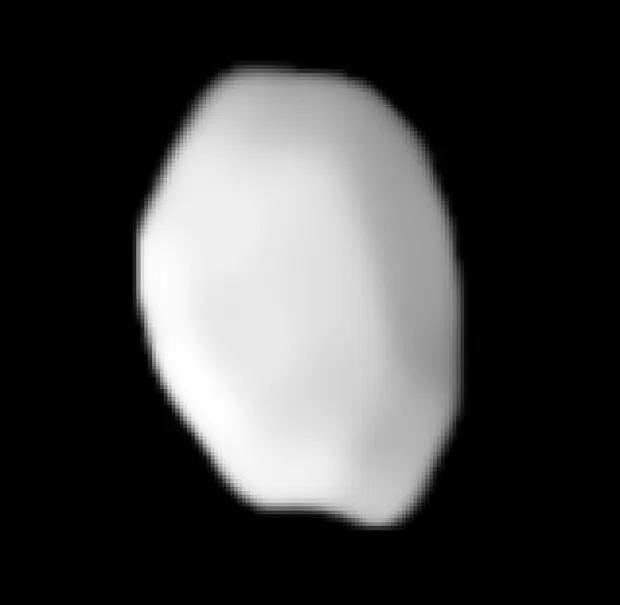
Raymond Smith Dugan discovered Davida at Heidelberg on 30 May 1903. It is a dark body of carbon-rich rock, about 298 km across on average but clearly elongated. Seen from the Earth, even through a large telescope, most asteroids are only points of light. How can astronomers tell how fast one spins? They measure its brightness night after night. An elongated asteroid reflects more sunlight when we see its long side and less when it turns its end towards us, so its brightness rises and falls in a regular rhythm, called a light curve. For Davida, that rhythm repeats every 5.13 hours: a day on Davida is shorter than a school day.