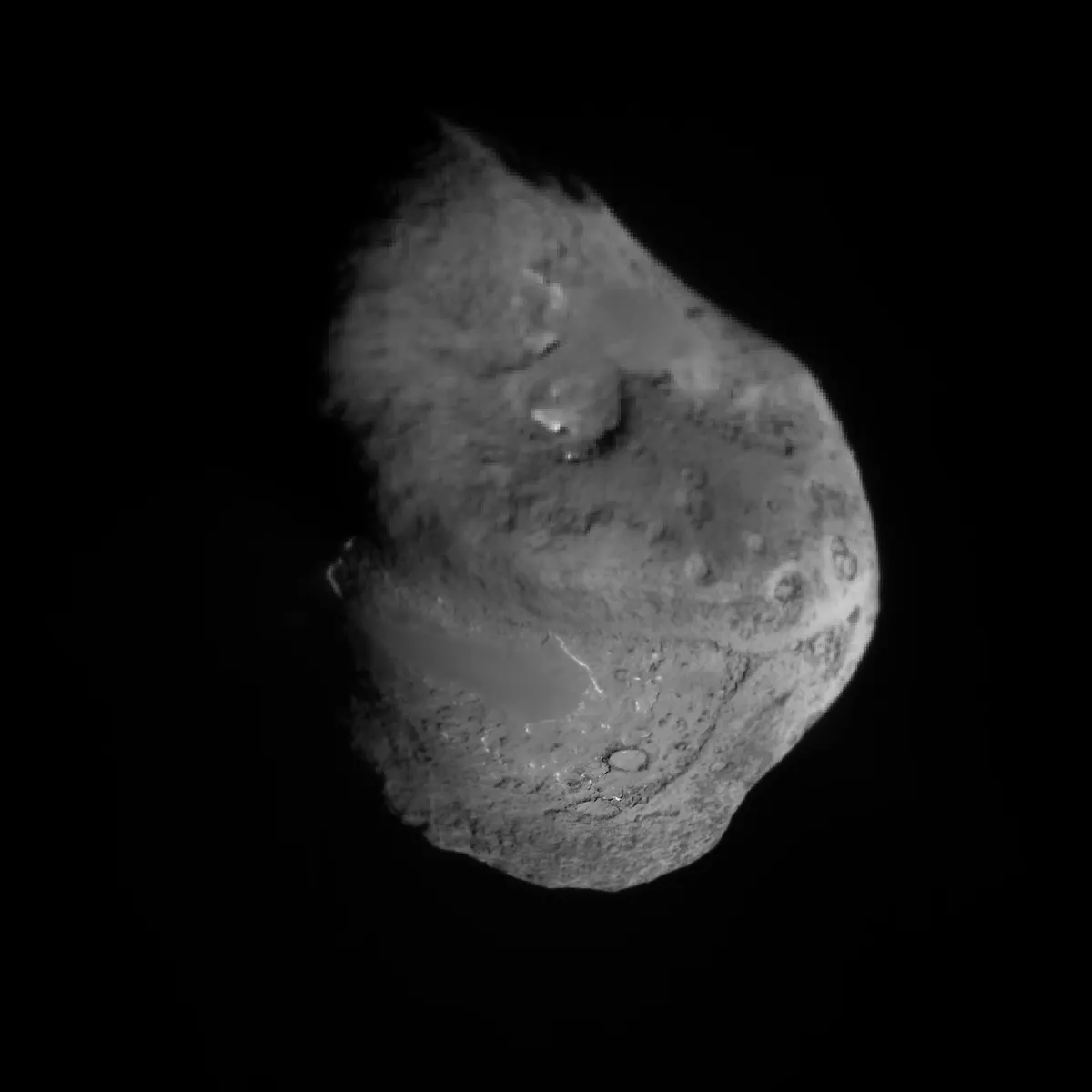
The surface of a comet is not what it is made of: the Sun’s heat bakes it into a dark crust of dust, while fresh ice hides beneath. To look inside, NASA’s Deep Impact spacecraft released an impactor, a 370 kg block made mostly of copper, which hit Comet Tempel 1 on 4 July 2005 at more than 10 km/s. The flyby spacecraft watched a bright plume of very fine dust and ice burst out, showing that the nucleus is fluffy and porous, more like a pile of powder than a solid rock. Six years later, on 14 February 2011, NASA’s Stardust flew past and photographed the crater left by the impact. Tempel 1 goes around the Sun every 5.6 years; its next perihelion falls on 12 February 2028.