Perigee FR

Where is Comet Hartley-IRAS now?

Comet Hartley-IRAS goes around the Sun every 21.5 years in the opposite direction to the planets; its live distance is computed below.

Live 3D view: Comet Hartley-IRAS

All eight planets go around the Sun in the same direction, a trace of the flat, spinning disc of gas and dust they formed from. Comet Hartley-IRAS does the opposite: its orbit is retrograde. Comets can do this because many of them formed or were scattered far from that disc, in the Oort cloud, a huge sphere of icy bodies around the solar system, and fell inwards from any direction. This one was photographed by Malcolm Hartley in Australia on 4 November 1983 and detected six days later by IRAS, the first space telescope to survey the sky in infrared light, which sees the warmth of dust. It goes around the Sun every 21.5 years; its perihelion of this apparition falls on 27 November 2026, 1.27 au from the Sun.
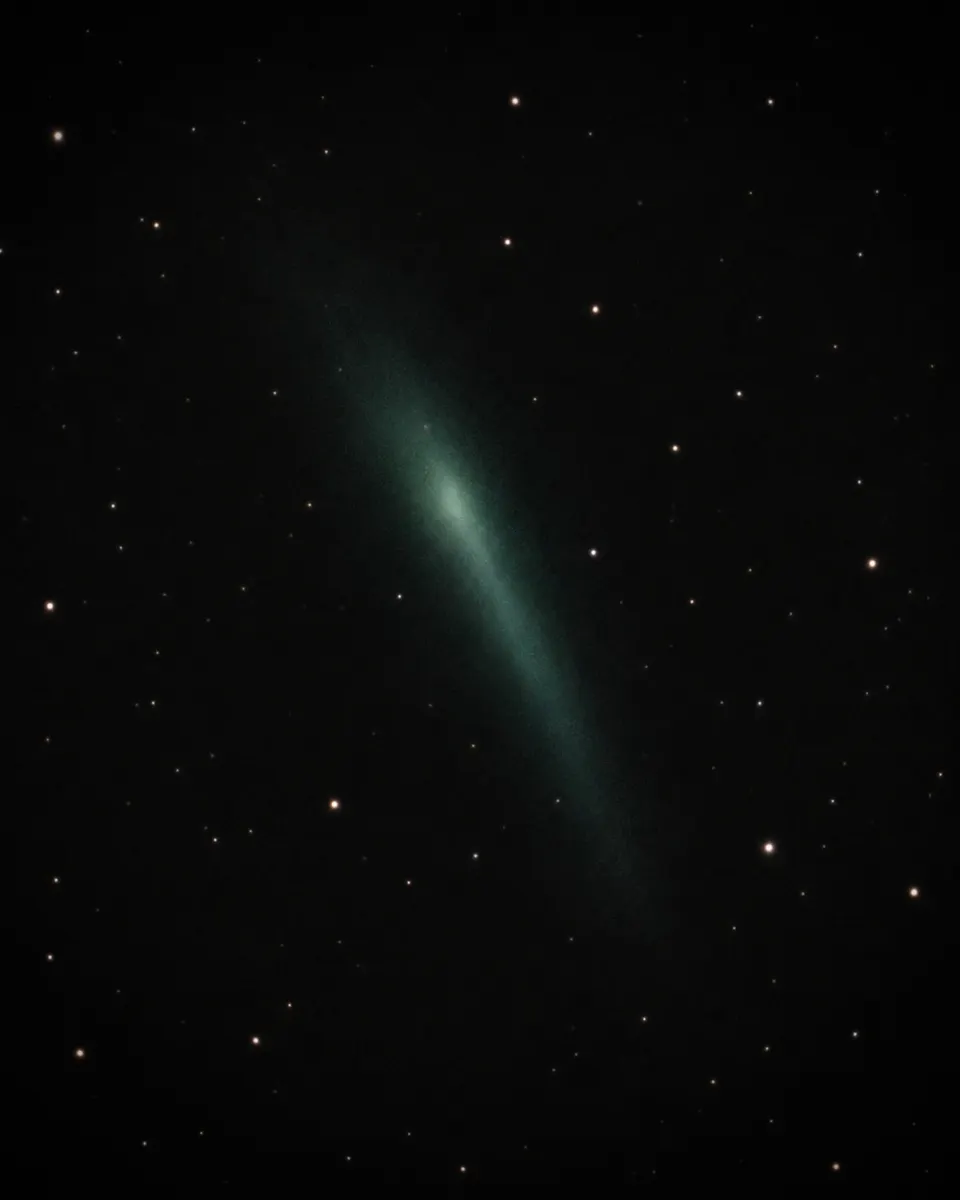
Comet Hartley-IRAS
Photo · Denis Melamed, CC BY 4.0 · source

About Comet Hartley-IRAS

Designation
161P/Hartley-IRAS
Type
Periodic comet
Discovered
1983-11-04

Today

Photographed by Malcolm Hartley at Siding Spring Observatory, Australia, on 1983-11-04 and detected six days later by IRAS, the first infrared space telescope. It goes around the Sun every 21.5 years, in the opposite direction to the planets. In its current apparition it passes perihelion on 2026-11-27, 1.27 au from the Sun, and should reach only about magnitude 11: a telescope target.

Questions and answers

Do other comets go backwards?

Yes: Halley’s Comet is the best known; many long-period comets too, since they arrive from every direction.

Can I see Hartley-IRAS?

Only with a telescope: it should reach only about magnitude 11 in this apparition.

Where the numbers come from

Values refresh every second in your browser; the published data are checked every 10 minutes and updated several times a day.