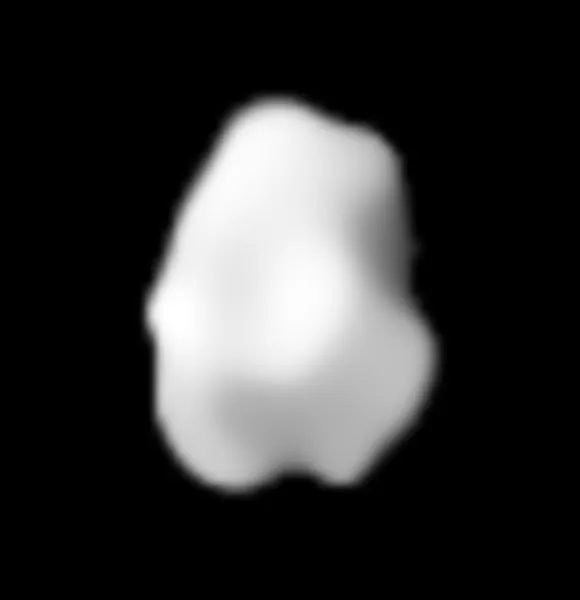
On 10 July 2010, ESA’s Rosetta, on its way to comet 67P/Churyumov–Gerasimenko, passed about 3,160 km from Lutetia and photographed a body about 121 km long, the largest asteroid seen up close by a spacecraft at the time. Its surface is crowded with craters, and craters work like a clock: impacts pile up over time, so the more craters a surface has, the older it is. Lutetia has been battered for billions of years, which makes it a leftover from the early solar system, one of the building blocks that never became part of a planet. Hermann Goldschmidt discovered it from Paris in 1852 and gave it the Latin name of his city.