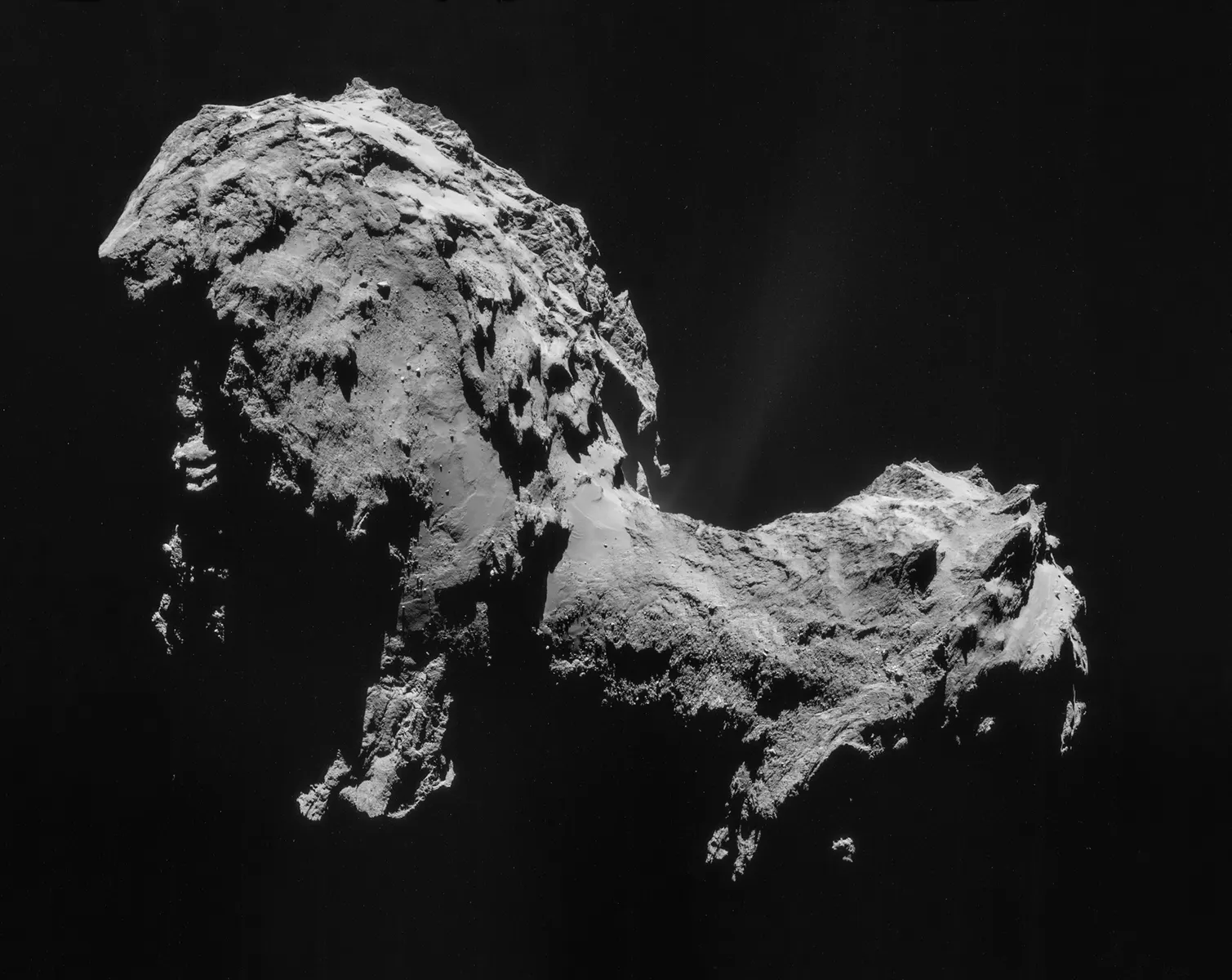
ESA’s Rosetta travelled for ten years to reach Comet 67P, arriving on 6 August 2014. Instead of a quick flyby, it went into orbit and followed the comet for two years, watching it wake up as it neared the Sun: jets of gas and dust grew from its surface, then calmed again as it moved away. Its odd duck shape, two lobes joined by a narrow neck, suggests two smaller bodies that touched gently long ago and stuck together. On 12 November 2014 the Philae lander became the first craft to land on a comet, bouncing before it came to rest in a shadowed spot. Rosetta found organic molecules, the building blocks of chemistry, in the comet’s dust and gas, and ended its mission by touching down on 30 September 2016.