Perigee FR

Where is the asteroid Juno now?

Juno, the third asteroid ever discovered, was counted among the planets for decades; its live distance is computed below.

Live 3D view: Juno

Karl Ludwig Harding discovered Juno on 1 September 1804, after Ceres and Pallas and before Vesta. At first these four bodies were simply added to the list of planets, and school books of the time named eleven planets. But from 1845 new ones were found one after another, all small and all between Mars and Jupiter. Astronomers understood that they formed a separate population and called them asteroids, “star-like”, because in a telescope they look like points, not discs. The same story was repeated in 2006 with Pluto, when similar bodies were found beyond Neptune. About 254 km across, Juno is one of the two largest stony asteroids.
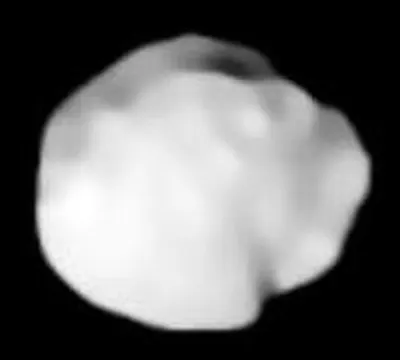
Juno
Telescope image · P. Vernazza et al. 2021 (A&A 654, A56), ESO VLT/SPHERE, CC BY-SA 4.0 · source

About Juno

Designation
3 Juno
Group
Main asteroid belt
Mean diameter
254 km
Rotation period
7 h
Discovered
1804-09-01 (Karl Ludwig Harding)

Today

The third asteroid discovered, by Karl Ludwig Harding on 1804-09-01; like Ceres, Pallas and Vesta, it was counted as a planet for decades. About 254 km across, it is one of the two largest stony (S-type) asteroids.

Questions and answers

Is the asteroid Juno related to NASA’s Juno probe?

Only by name: both honour the Roman goddess Juno, wife of Jupiter. The probe orbits Jupiter, not the asteroid.

Why is Juno numbered 3?

The first asteroids were numbered in the order of their discovery: Ceres is 1, Pallas 2, Juno 3 and Vesta 4.

Where the numbers come from

Values refresh every second in your browser; the published data are checked every 10 minutes and updated several times a day.